
7 Hygienic Wall Cladding Adhesive Mistakes To Avoid
The success of a hygienic wall cladding relies heavily on the adhesive holding it in place. Even the highest quality wall cladding can fail prematurely if the wrong adhesive is used or if best practice isn't followed during installation.
The consequences can be significant. Panels may lift or debond, moisture can find its way behind the cladding, hygiene standards may be compromised and costly remedial work can follow.
The good news is that most adhesive failures are entirely preventable. Here are seven of the most common mistakes we see and how to avoid them.
1. Choosing the Wrong Adhesive
Not all adhesives are suitable for every installation. The correct choice depends on the wall substrate, environmental conditions and the type of wall cladding being installed.Some adhesives are better for use in demanding environments like kitchens, hospitals, and food processing facilities. Others don’t provide full coverage and are better suited to smaller areas like splashbacks.
Before installation, always identify:
-
the wall substrate
-
whether the surface is porous or non-porous
-
any existing coatings or finishes
-
moisture levels
-
the manufacturer's recommended adhesive
-
the location of the walls
Selecting the correct adhesive from the outset provides the strongest foundation for a long-lasting installation.
2. Skipping Proper Wall Preparation
Even the best adhesive cannot bond effectively to a dirty or unstable surface.
Walls should be clean, dry, sound and free from:
-
dust
-
grease
-
loose paint
-
wallpaper
-
flaking plaster
-
old adhesive residues.
Any contamination reduces the adhesive's ability to create a secure bond.
Taking time to prepare the substrate properly is one of the simplest ways to improve installation quality and reduce the likelihood of future failures.
3. Installing in Temperatures That Are Too Cold
Temperature is one of the most overlooked factors in successful installations.
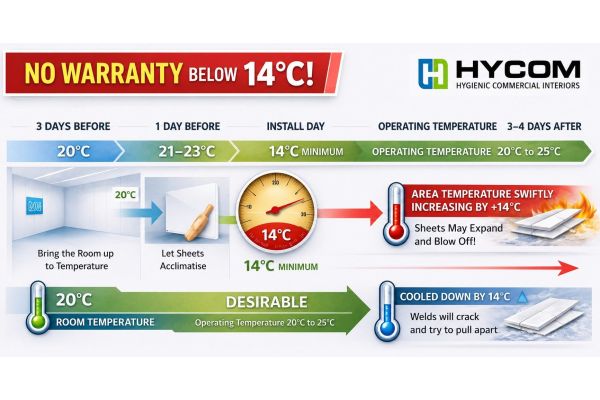
Cold walls, cold adhesive or cold PVC sheets can all affect how well the adhesive cures. If materials haven't acclimatised, the bond strength may be reduced and panels can move as temperatures change.
As a general guide, wall cladding, adhesive and the room itself should be brought up to the manufacturer's recommended installation temperature and maintained 24-48 hours before, during and after installation.Failure to do this will void any manufacturer warranties.
Planning ahead and allowing products to acclimatise can make a significant difference to the finished result.
4. Applying Too Much – or Too Little – Adhesive
More adhesive doesn't necessarily create a stronger bond.
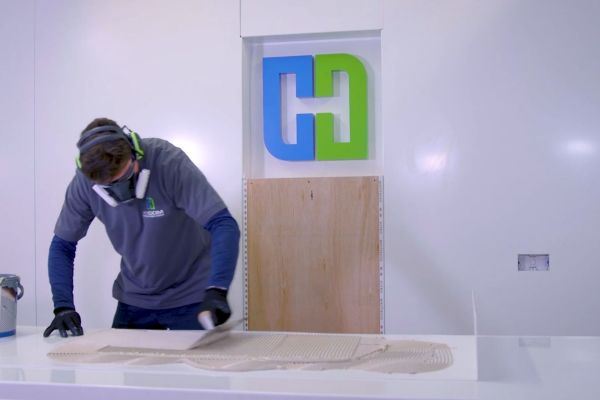
Applying excessive adhesive can increase curing times and create uneven support behind the sheet. Too little adhesive may leave voids, reducing overall bond strength and increasing the risk of movement.
Always follow the manufacturer's guidance for:
-
application pattern
-
bead spacing
-
coverage rates
-
trowel or applicator recommendations.
Consistency is key to achieving a reliable installation.
5. Failing to Apply Even Pressure
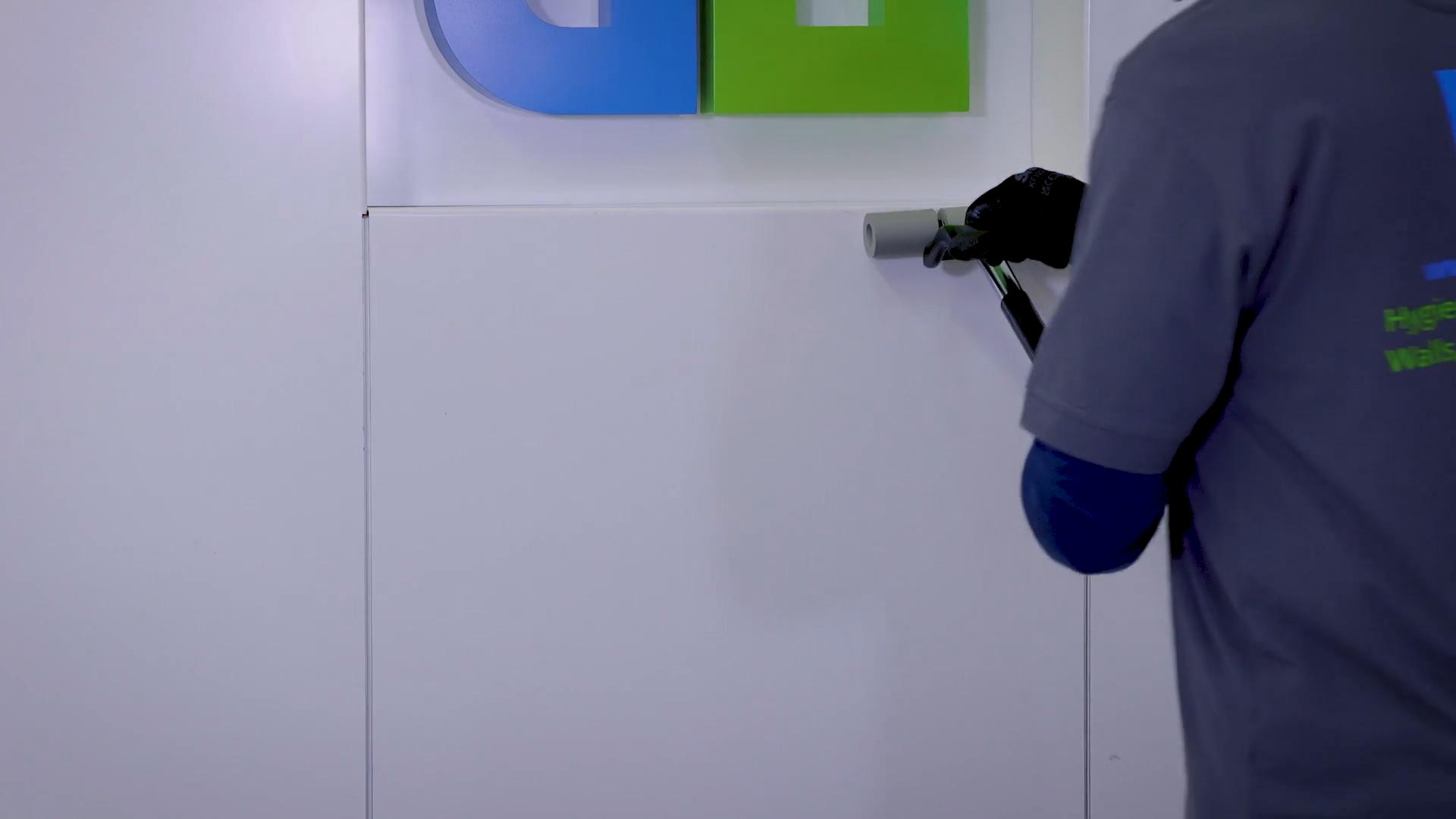
Once the sheet is positioned, it should be firmly rolled onto the wall to ensure full contact between the adhesive and substrate.
Without even pressure:
-
air pockets may remain
-
adhesive transfer may be incomplete
-
localised weak spots can develop.
Using the appropriate roller across the entire surface helps create a consistent bond and removes trapped air.
6. Ignoring Moisture Issues
Adhesives are designed to bond to stable and dry substrates. If moisture is trapped within the wall, or if leaks haven't been resolved before installation, the adhesive bond may deteriorate over time.
Before fitting hygienic wall cladding:
-
investigate signs of damp
-
repair leaks
-
ensure surfaces are fully dry before bonding.
Treating the symptom rather than the cause often results in repeat failures.
7. Rushing the Installation
Modern installation programmes are often under pressure, but adhesives still need sufficient time to cure.
Moving on to welding, trimming or exposing newly installed panels to heavy cleaning before the adhesive has fully cured can place unnecessary stress on the bond.
Following the manufacturer's curing times helps ensure maximum strength and long-term performance.
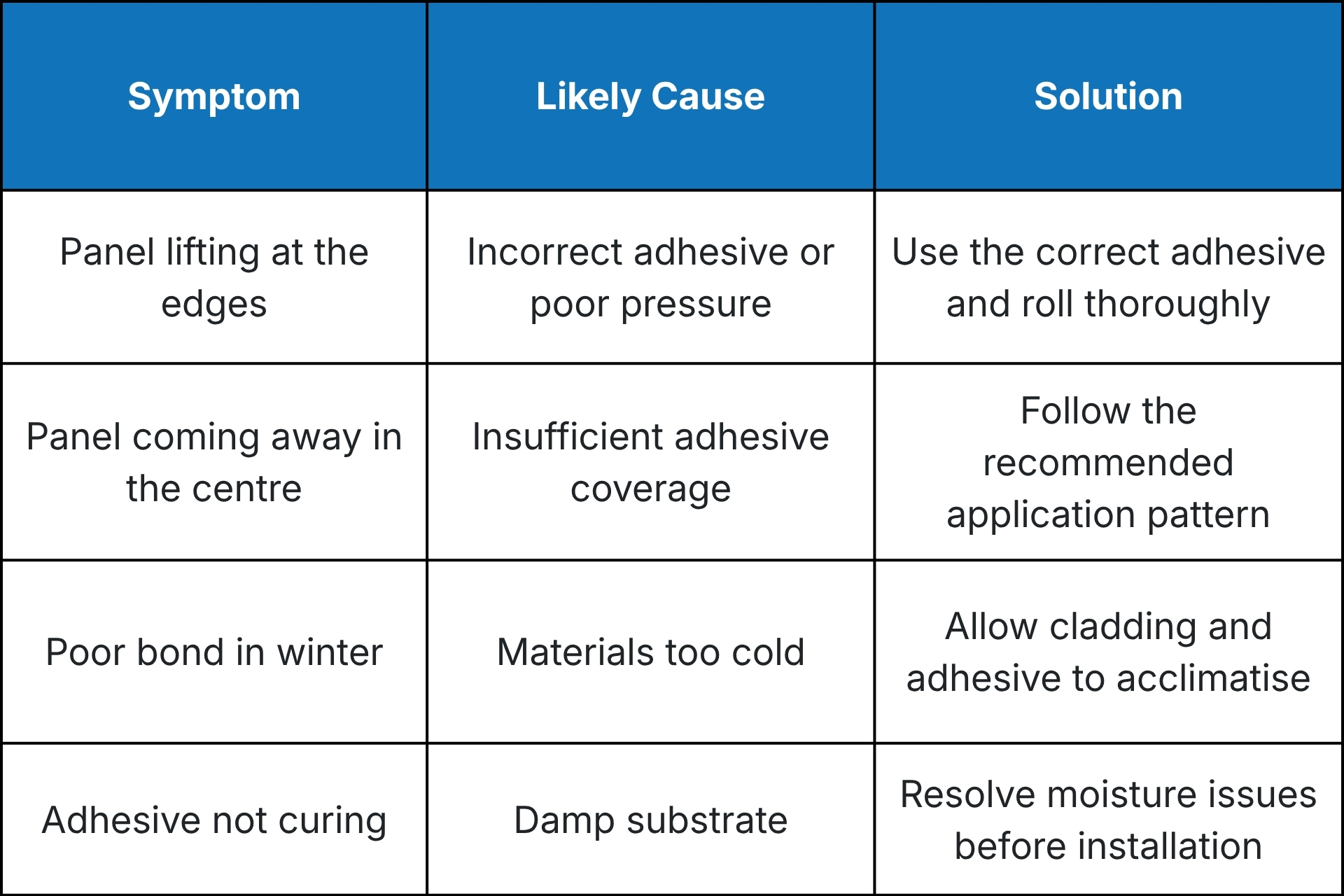
Quick Adhesive Troubleshooter:
A Strong Installation Starts Behind the Panel
When hygienic wall cladding performs well, the adhesive is rarely noticed. Yet it plays one of the most important roles in the entire installation.
By choosing the correct adhesive, preparing the substrate properly and following recommended installation practices, installers can minimise the risk of failures, reduce costly call-backs and deliver a finish that performs reliably for years to come.
At Hycom, we supply specialist adhesives designed specifically for hygienic wall cladding installations. If you're unsure which product is right for your project or substrate, our technical team is always happy to help.